


Introduction: Gold Enters the Blockchain Era
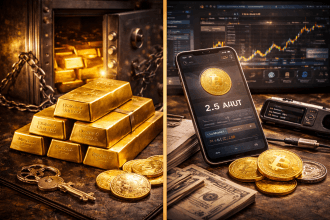
Gold has always adapted to the dominant financial infrastructure of its time. It moved from physical exchange to paper certificates, from vault-backed claims to exchange-traded funds. Today, gold is entering its next evolutionary phase: digital gold, built on blockchain technology.
- Introduction: Gold Enters the Blockchain Era
- What Is Digital Gold?
- Tokenized Gold: The Core of Digital Gold
- How Digital Gold Is Backed by Physical Metal
- Digital Gold vs “Paper Gold”: The Critical Difference
- Side-by-Side Comparison
- Why Progressive Investors Are Attracted to Digital Gold
- Risks and Limitations of Digital Gold
- Digital Gold vs Physical Gold: Complement, Not Replacement
- The Role of Digital Gold in Web3 and DeFi
- Common Misconceptions About Digital Gold
- Conclusion: Digital Gold as a Bridge Asset
For progressive investors, digital gold represents a bridge between traditional hard assets and Web3 finance. It promises the stability and intrinsic value of physical gold combined with the speed, transparency, and programmability of blockchain-based systems. But not all “digital gold” is created equal, and confusion between tokenized gold, paper gold, and synthetic exposure remains widespread.
This article explains what digital gold really is, how it is backed by physical metal, and how it fundamentally differs from traditional “paper gold” instruments. The goal is to provide clarity—especially for investors who are comfortable with crypto and blockchain, but want real asset backing rather than pure speculation.
What Is Digital Gold?
Digital gold is a broad term used to describe gold exposure delivered through digital or blockchain-based infrastructure. In its most robust form, it refers to tokenized gold—blockchain tokens that represent direct ownership claims on physical gold stored in secure vaults.
Unlike cryptocurrencies such as Bitcoin, digital gold does not rely on scarcity enforced by code alone. Its value is anchored to real, allocated physical gold.
Key Idea
Digital gold is not “virtual gold.”
It is physical gold with a digital ownership layer.
Tokenized Gold: The Core of Digital Gold
What Is Tokenized Gold?
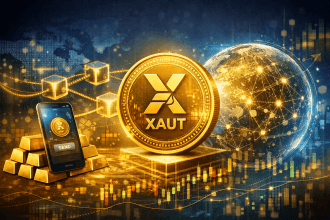
Tokenized gold is gold that has been converted into digital tokens on a blockchain. Each token represents a specific quantity of physical gold—most commonly one troy ounce—held in professional vaults.
Well-known examples include:
- Tether Gold (XAUT)
- Paxos Gold (PAXG)
While implementations vary, the core structure is similar across reputable issuers.
How Digital Gold Is Backed by Physical Metal
The credibility of digital gold depends entirely on how the physical backing works.
1. Physical Gold Custody
- Gold is stored in high-security, insured vaults
- Bars typically meet LBMA (London Bullion Market Association) standards
- Gold is allocated, not pooled, in reputable structures
2. Token Issuance
- Blockchain tokens are minted to match the amount of gold held
- Supply is tied directly to vault inventory
- Independent audits verify reserves
3. Ownership and Transfer
- Token holders own a legal claim on the underlying gold
- Tokens can be transferred globally in minutes
- Ownership changes without moving the physical metal
4. Redemption (Key Differentiator)
- Many tokenized gold systems allow redemption for physical gold
- Minimum redemption thresholds usually apply
- This link to physical delivery anchors trust
This structure is what separates serious digital gold from marketing-driven “gold-themed” crypto assets.
Digital Gold vs “Paper Gold”: The Critical Difference
A major source of confusion is the difference between digital gold and traditional paper gold.
What Is Paper Gold?
Paper gold refers to financial instruments that provide exposure to gold prices without granting ownership of physical metal. Examples include:
- Futures contracts
- Unallocated gold accounts
- Some derivatives and certificates
- Most retail gold ETFs
In these systems:
- Investors hold claims, not gold
- Settlement is usually cash-based
- Physical delivery is limited or impossible
Side-by-Side Comparison
| Feature | Digital (Tokenized) Gold | Paper Gold |
|---|---|---|
| Physical backing | Yes (allocated) | Often indirect or none |
| Ownership | Direct claim on gold | Financial claim |
| Blockchain settlement | Yes | No |
| Redeemable for metal | Often | Rare |
| Counterparty risk | Lower (issuer-dependent) | Higher |
| Use in DeFi / Web3 | Yes | No |
Bottom line:
Digital gold aims to digitize ownership.
Paper gold only digitizes price exposure.
Why Progressive Investors Are Attracted to Digital Gold
Digital gold appeals to investors who want:
- Hard-asset backing
- Crypto-native portability
- Independence from traditional banking rails
- Exposure to gold without physical logistics
Key Advantages
- True gold exposure in a digital format
- 24/7 global transferability
- Fractional ownership (no need to buy a full bar or coin)
- Integration with Web3 ecosystems
- Transparency through blockchain records
For crypto-native investors, digital gold often feels like the first “real asset” that truly belongs in Web3.
Risks and Limitations of Digital Gold
Despite its advantages, digital gold is not risk-free.
Key Risks to Understand
- Issuer risk
Trust depends on the entity managing the gold and tokens. - Custodial risk
Gold must actually exist and remain properly stored. - Regulatory uncertainty
Digital assets face evolving regulations across jurisdictions. - Redemption friction
Physical redemption is possible, but not always practical for small holders. - Blockchain risk
Network congestion or smart contract issues may affect transfers.
Digital gold reduces some risks—but introduces new ones.
Digital Gold vs Physical Gold: Complement, Not Replacement
Digital gold does not replace physical gold. It complements it.
- Physical gold excels at:
- Sovereignty
- Crisis resilience
- Zero digital dependency
- Digital gold excels at:
- Mobility
- Liquidity
- Integration with modern finance
Many advanced investors use both, allocating:
- Physical gold as a long-term foundation
- Digital gold as a flexible, liquid layer
The Role of Digital Gold in Web3 and DeFi
Digital gold is increasingly used as:
- Collateral in DeFi protocols
- A stable-value asset within crypto portfolios
- A hedge against crypto volatility
- A bridge between traditional wealth and decentralized finance
This is where digital gold becomes more than a mirror of physical gold—it becomes programmable capital.
Common Misconceptions About Digital Gold
- “It’s just another cryptocurrency” — false
- “It’s the same as a gold ETF” — structurally incorrect
- “You can’t redeem it” — depends on issuer
- “It replaces physical gold” — it doesn’t
- “All digital gold is safe” — quality varies significantly
Understanding structure matters more than branding.
Conclusion: Digital Gold as a Bridge Asset
Digital gold represents a meaningful evolution in gold ownership. It combines the timeless role of gold as a store of value with the speed and flexibility of blockchain infrastructure. When properly structured and fully backed, tokenized gold offers something rare: real asset ownership in a digital-native form.
For progressive investors, digital gold is not about replacing tradition—it is about extending it into a new financial architecture. The key is discernment: knowing the difference between true tokenized gold and paper substitutes wrapped in modern terminology.
In the long run, digital gold may not replace physical bullion—but it is increasingly likely to stand beside it as a core asset in the portfolios of investors who live comfortably at the intersection of legacy finance and Web3.