


Introduction: Trust as the Core Question of Digital Gold
Tokenized gold has become one of the most discussed “bridge assets” between traditional finance and the crypto economy. For crypto investors seeking stability, inflation protection, or diversification away from pure volatility, gold-backed tokens such as XAUT appear to offer an elegant solution: the historical trust of gold combined with the flexibility of blockchain-based ownership.
- Introduction: Trust as the Core Question of Digital Gold
- What Is Tokenized Gold?
- What Is XAUT (Tether Gold)?
- How XAUT Works: Step by Step
- Storage, Audits, and Reserves: How Trust Is Built
- How XAUT Differs from “Paper Gold”
- Major Risks Crypto Investors Must Understand
- Is XAUT Safer Than Stablecoins?
- Who Should Consider Tokenized Gold?
- Tokenized Gold vs Physical Gold: Not a Replacement
- Trust Checklist for Tokenized Gold Investors
- Conclusion: How Safe Is Digital Ownership of Gold?
Yet the key word in this equation is trust.
Unlike Bitcoin or other fully decentralized assets, tokenized gold depends on real-world infrastructure: vaults, custodians, audits, and legal frameworks. This raises an unavoidable question for crypto-native investors:
How safe is digital ownership of gold when that gold exists outside the blockchain?
This article provides a concrete, investor-focused analysis of tokenized gold with a specific focus on XAUT (Tether Gold) and similar assets. We examine how XAUT works, how physical reserves are stored and audited, and which risks—regulatory, custodial, and structural—investors must understand before treating tokenized gold as a serious part of a crypto portfolio.
What Is Tokenized Gold?
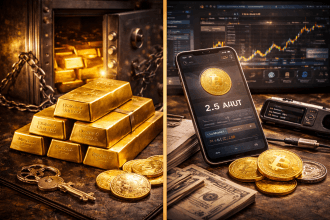
Tokenized gold is a digital representation of physical gold ownership recorded on a blockchain. Each token corresponds to a defined quantity of real gold—most commonly one troy ounce—stored in professional vaults.
Unlike “paper gold” instruments (futures, unallocated accounts, many ETFs), tokenized gold aims to preserve a direct link between token supply and physical metal.
In theory, this makes tokenized gold closer to digital bullion than to a derivative.
What Is XAUT (Tether Gold)?
Tether Gold (XAUT) is one of the largest and most liquid tokenized gold products in the crypto market.
Core Characteristics of XAUT
- 1 XAUT = 1 troy ounce of physical gold
- Gold bars meet LBMA (London Bullion Market Association) standards
- Physical gold is stored in professional vaults
- XAUT is issued on public blockchains (Ethereum and others)
XAUT is designed primarily for investors who want gold exposure within the crypto ecosystem, without exiting into traditional banking or brokerage systems.
How XAUT Works: Step by Step
Understanding the mechanics behind XAUT is essential for evaluating its safety.
1. Physical Gold Acquisition
- Gold is purchased by the issuer
- Bars are LBMA-compliant (typically ~400 oz Good Delivery bars)
- Each bar has a serial number, weight, and purity specification
2. Custody and Storage
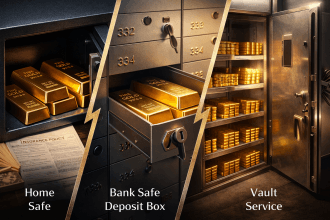
- Gold is stored in secure, insured vaults
- Vaults are operated by professional custodians
- Gold is held on an allocated basis, not pooled
3. Token Issuance
- XAUT tokens are minted to match the gold held
- Total supply is linked to physical reserves
- Tokens represent ownership claims on specific gold bars
4. Ownership Tracking
- Token ownership is recorded on the blockchain
- Transfers occur peer-to-peer without moving the metal
- Ownership can change thousands of times while gold stays in the vault
5. Redemption Rights
- XAUT holders can redeem tokens for physical gold
- Minimum redemption thresholds apply
- Delivery logistics and fees are involved
This redemption mechanism is critical: it anchors the token’s value to real-world gold.
Storage, Audits, and Reserves: How Trust Is Built
Gold Storage
XAUT’s credibility depends on the existence and safekeeping of physical gold.
Key storage principles:
- Allocated gold (not a general claim)
- Professional vault infrastructure
- Insurance coverage
- Serial-numbered bars
Audits and Transparency
- Periodic reserve attestations are published
- Independent third parties verify gold holdings
- Bar lists and total ounces are disclosed
While audits do not eliminate all risk, they significantly reduce the probability of fractional backing or misrepresentation.
How XAUT Differs from “Paper Gold”
Many crypto investors underestimate how different tokenized gold is from traditional gold exposure.
Paper Gold (ETF, Futures, Certificates)
- Cash-settled in most cases
- Limited or no physical redemption
- Multiple layers of intermediaries
- High systemic dependence
XAUT and Similar Tokenized Gold
- Direct link to physical metal
- On-chain ownership transfer
- Potential for physical redemption
- Fewer financial intermediaries
Key distinction:
XAUT represents tokenized ownership, not just price exposure.
Major Risks Crypto Investors Must Understand
Despite its strengths, XAUT is not risk-free.
1. Custodial Risk
- Gold is stored by third parties
- Investors rely on vault operators and custodians
- Theft, mismanagement, or legal disputes are low-probability but real risks
2. Issuer Risk
- XAUT depends on the issuer’s integrity
- Governance, transparency, and legal structure matter
- This is not a decentralized protocol
3. Regulatory Risk
- Tokenized gold exists at the intersection of:
- Commodity regulation
- Digital asset regulation
- Cross-border law
- Regulatory treatment may evolve or tighten
4. Redemption Friction
- Physical redemption is possible but not frictionless
- Minimum quantities and fees apply
- Not practical for small holders
5. Blockchain Risk
- Smart contract vulnerabilities
- Network congestion
- Custodial wallet risks
Crypto-native risks still apply—even if the underlying asset is gold.
Is XAUT Safer Than Stablecoins?
XAUT is often compared to fiat-backed stablecoins.
Key differences:
- XAUT is backed by a hard asset
- Gold cannot be printed or inflated
- Value is less dependent on monetary policy
However:
- XAUT is less liquid than major stablecoins
- It is not designed for everyday payments
- Volatility is lower than crypto, but higher than fiat-pegged tokens
XAUT is best viewed as digital hard money, not digital cash.
Who Should Consider Tokenized Gold?
XAUT and similar assets are best suited for:
- Crypto investors seeking volatility reduction
- Long-term holders who value asset backing
- Investors hedging against fiat and crypto risk
- Web3 participants needing gold exposure on-chain
They are not ideal for:
- Short-term traders seeking leverage
- Investors unwilling to accept issuer risk
- Those seeking full decentralization
Tokenized Gold vs Physical Gold: Not a Replacement
Tokenized gold does not replace physical bullion.
- Physical gold = sovereignty, crisis insurance, zero digital dependency
- Tokenized gold = liquidity, speed, Web3 compatibility
Many sophisticated investors use both, separating roles clearly:
- Physical gold as strategic reserve
- Tokenized gold as tactical or on-chain asset
Trust Checklist for Tokenized Gold Investors
Before investing in XAUT or similar assets, ask:
- Is the gold allocated or pooled?
- Are independent audits published?
- Is physical redemption possible?
- Who controls the vaults?
- What jurisdictions are involved?
- How transparent is the issuer?
If these questions are not clearly answered, risk increases significantly.
Conclusion: How Safe Is Digital Ownership of Gold?
Tokenized gold like XAUT represents one of the most credible attempts to bring real-world value into the crypto ecosystem. When properly structured, audited, and transparently managed, it offers a powerful combination: the stability of gold with the flexibility of blockchain ownership.
However, safety in tokenized gold is not automatic—it is earned through structure, governance, and transparency. XAUT reduces many risks associated with paper gold, but introduces others tied to custody, regulation, and issuer trust.
For crypto investors who understand these trade-offs, tokenized gold can serve as a valuable stabilizer in an otherwise volatile environment. For those seeking absolute sovereignty and zero intermediaries, physical gold remains unmatched.
The future of gold in Web3 will not be purely digital or purely physical—it will be hybrid, and tokenized gold is a key pillar of that future.