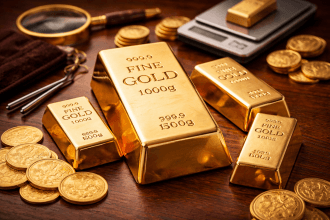



redicting gold prices remains one of the most challenging endeavors in financial markets, as the precious metal responds to an intricate web of macroeconomic forces, geopolitical developments, central bank policies, and technical market dynamics. Unlike corporate stocks with earnings reports or bonds with defined cash flows, gold generates no income and derives value from its role as a monetary alternative, inflation hedge, and safe-haven asset during periods of uncertainty.
- The Macroeconomic Framework for Gold Valuation
- Geopolitical Factors Influencing Gold Demand
- Central Bank Policy and Its Gold Price Implications
- Expert Analyst Perspectives on Gold’s Outlook
- Technical Analysis and Key Price Levels
- Scenario Analysis: Gold Price Pathways Through 2025-2026
- Conclusion: Navigating Gold’s Complex Price Dynamics
This comprehensive analysis examines the key factors influencing gold’s trajectory, explores various price scenarios based on different macroeconomic outcomes, synthesizes perspectives from leading market analysts, and identifies critical technical levels that traders and investors monitor. Whether you’re a long-term investor seeking to understand gold’s role in portfolio allocation or an active trader timing entry and exit points, understanding these multifaceted dynamics proves essential for informed decision-making.
The Macroeconomic Framework for Gold Valuation
Gold occupies a unique position in global financial markets, functioning simultaneously as a commodity, currency alternative, and investment asset. This multifaceted nature means numerous economic variables influence its price, often in complex and sometimes contradictory ways.
Real Interest Rates: The Primary Driver
Real interest rates, calculated as nominal rates minus inflation expectations, represent perhaps the single most important factor determining gold’s opportunity cost and investment attractiveness. When real rates fall or turn negative, gold becomes more attractive relative to bonds and cash, as investors sacrifice nothing in foregone interest income while gaining potential appreciation and inflation protection.
The relationship proves remarkably consistent historically. Periods of deeply negative real rates, such as the 1970s, the 2008-2011 aftermath of the financial crisis, and the 2020-2021 pandemic response, coincided with major gold bull markets. Conversely, the 1980s and 1990s featured high real rates and devastating bear markets for precious metals.
Current dynamics show complex patterns. Central banks raised nominal rates aggressively during 2022-2023 to combat inflation, creating temporarily positive real rates that pressured gold. However, as inflation moderated faster than rate cuts occurred, real rates began declining again, supporting gold’s 2024 rally toward record highs above twenty-seven hundred dollars per ounce.
Looking forward, the trajectory of real rates depends on the delicate balance between central bank policy normalization and inflation persistence. If inflation proves stickier than expected while central banks pause or reverse rate increases, real rates could remain low or negative, providing sustained support for gold prices. Alternatively, if inflation returns decisively to target ranges and rates remain elevated, gold could face headwinds from positive real rate environments.
Dollar Strength and Gold’s Inverse Relationship
Gold prices denominated in US dollars typically exhibit inverse correlation with dollar strength against other major currencies. A stronger dollar makes gold more expensive for international buyers using other currencies, reducing demand and pressuring prices. Conversely, dollar weakness translates to relative gold strength as international purchasing power increases.
This relationship stems partially from gold’s role as a dollar alternative. When confidence in dollar stability wavers due to excessive money printing, fiscal concerns, or loss of reserve currency status fears, investors rotate toward gold as monetary insurance. Periods of sustained dollar weakness often coincide with gold strength, as seen during the 2000s when the dollar declined against major currencies while gold rallied from around two hundred fifty dollars to over nineteen hundred dollars.
The dollar’s future trajectory depends on several factors including relative economic performance between the United States and other major economies, interest rate differentials favoring or disfavoring dollar-denominated assets, and confidence in US fiscal sustainability given massive government debt levels. Any combination that weakens the dollar structurally would likely support higher gold prices over time.
However, this relationship isn’t perfectly consistent. During severe global crises, both the dollar and gold can strengthen simultaneously as both serve safe-haven roles. The March 2020 pandemic crisis initially saw both assets rally as investors fled riskier holdings, demonstrating that gold-dollar correlation varies based on the specific nature of market stress.
Inflation Dynamics and Purchasing Power Protection
Gold’s reputation as an inflation hedge represents core investment rationale for many holders. While short-term inflation movements don’t always correlate tightly with gold prices, over longer periods gold has maintained purchasing power across centuries and civilizations, unlike paper currencies that inevitably depreciate.
The 2021-2022 inflation surge to forty-year highs initially failed to drive proportional gold gains, as rapid central bank rate increases created positive real rates that offset inflation fears. However, this lag doesn’t invalidate gold’s inflation-hedging properties over full cycles. Historical analysis shows gold performs best not during inflation peaks but during periods when inflation remains elevated while policy responses prove inadequate or delayed.
Looking ahead, inflation expectations drive gold’s appeal more than current inflation rates. If markets anticipate sustained higher inflation due to deglobalization, energy transition costs, aging demographics straining government finances, or central bank tolerance for above-target inflation, gold should benefit from increased demand as portfolio insurance regardless of current inflation readings.
The critical question involves whether the 2021-2023 inflation surge represented a temporary pandemic-related disruption or marked the beginning of a structural shift toward a higher inflation regime. Evidence supporting structural change includes persistent labor market tightness, ongoing supply chain reorganization, geopolitical fragmentation disrupting efficient global trade, and massive government debt levels that create incentives for inflation-based debt reduction. These factors suggest inflation may average higher over coming decades than the 2010s’ low-inflation environment, supporting gold’s long-term outlook.
Geopolitical Factors Influencing Gold Demand
Geopolitical tensions and uncertainty represent traditional drivers of safe-haven gold demand, as investors seek stability and wealth preservation assets during periods when conflict, instability, or systemic risks threaten traditional financial assets.
Major Geopolitical Tensions and Their Impact
The current geopolitical environment features multiple significant tensions with potential gold price implications. The ongoing Russia-Ukraine conflict that began in 2022 represents Europe’s largest land war since World War II, creating energy crises, disrupting grain supplies, and fracturing global economic relationships. This conflict demonstrated gold’s safe-haven appeal as prices rallied above two thousand dollars during the initial invasion despite rising interest rates that typically pressure gold.
US-China strategic competition across technology, trade, Taiwan, and regional influence creates persistent uncertainty regarding global economic architecture. The potential for conflict over Taiwan represents perhaps the most significant tail risk facing global markets, as such conflict would disrupt semiconductor supplies, international trade, and financial markets dramatically. Gold serves as insurance against such scenarios, with prices likely to surge substantially if Taiwan tensions escalate toward military confrontation.
Middle East instability continues affecting oil markets and creating periodic risk-off episodes supporting gold. Israeli-Palestinian tensions, Iran’s nuclear program, regional proxy conflicts, and potential disruptions to oil transit through strategic chokepoints all contribute to gold’s geopolitical premium. Any major escalation threatening oil supplies or drawing major powers into conflict would likely drive significant gold buying.
The broader trend toward multipolarity and great power competition after decades of relative American hegemony creates systemic uncertainty. As the post-Cold War era’s unipolar moment gives way to more contested global order, uncertainty about rules, institutions, and conflict resolution mechanisms supports gold’s role as a neutral, universally accepted store of value transcending any single power’s influence.
De-dollarization and Central Bank Gold Buying
One of the most significant recent developments involves accelerating central bank gold purchases, particularly by emerging market nations seeking to reduce dollar dependence. Global central banks purchased over one thousand metric tons annually in 2022 and 2023, the highest levels in decades, driven primarily by China, Russia, Turkey, India, and other nations diversifying away from dollar-denominated reserves.
This trend accelerated following sanctions freezing Russia’s foreign exchange reserves in response to Ukraine invasion. These actions demonstrated that even central bank reserves held in dollars, euros, or other Western currencies face potential seizure or restrictions during geopolitical conflicts, spurring nations to increase gold holdings as sanction-proof alternatives.
China’s central bank, the People’s Bank of China, disclosed substantial gold purchases during 2023-2024 after years of reporting no additions, suggesting potential sustained buying that creates persistent demand supporting prices. Given China’s massive dollar reserve holdings and gradual internationalization of the yuan, further portfolio rebalancing toward gold appears likely over coming years.
This central bank demand represents different market dynamics than investment flows. Central banks buy strategically for reserves diversification rather than trading tactically, creating relatively price-insensitive demand that establishes firm support under markets. If central banks sustain purchases at recent elevated levels, this structural demand should support higher average gold prices over the next decade compared to previous decades when central banks were net sellers.
Sanctions and Payment System Fragmentation
The weaponization of dollar-based payment systems and SWIFT messaging in various sanctions regimes creates incentives for nations to develop alternative payment mechanisms and hold reserves in assets beyond Western central bank control. Gold offers such an alternative, as physical holdings stored domestically or in neutral jurisdictions remain accessible regardless of financial sanctions.
Projects like China’s Cross-Border Interbank Payment System (CIPS), discussions of BRICS currencies or payment mechanisms, and bilateral trade agreements bypassing dollars all reflect efforts to reduce dependence on Western-controlled financial infrastructure. While these initiatives face substantial challenges and won’t replace the dollar quickly, their gradual development over decades could erode dollar dominance marginally, supporting gold as the ultimate neutral reserve asset.
This fragmentation trend suggests structural support for gold beyond cyclical factors. Even if specific geopolitical crises resolve, the underlying motivation for diversification away from concentrated dependence on dollar-based systems persists, creating ongoing demand particularly from official sector buyers.
Central Bank Policy and Its Gold Price Implications
Central bank monetary policies directly influence gold prices through interest rate decisions, balance sheet operations, forward guidance, and their broader impacts on inflation expectations and currency values.
Federal Reserve Policy Trajectory
The Federal Reserve’s policy path represents the most important central bank influence on gold given the dollar’s global dominance. The Fed’s aggressive 2022-2023 rate hiking cycle, raising rates from near zero to over five percent, created headwinds for gold by increasing opportunity costs and strengthening the dollar despite persistent inflation.
Looking forward, the Fed faces difficult trade-offs between containing inflation and avoiding recession as restrictive policy impacts economic activity with long lags. The timing and pace of eventual rate cuts will significantly impact gold prices. Premature or aggressive cuts suggesting inflation concerns overrode growth concerns would likely support gold by lowering real rates and potentially weakening the dollar.
However, if the Fed maintains higher-for-longer policy successfully achieving soft landing with inflation returning to target without severe recession, gold might face extended consolidation as positive real rates persist. The key variable involves whether current policy proves sufficiently restrictive to durably reduce inflation or whether additional tightening or extended restrictive policy becomes necessary.
Market participants closely monitor the Fed’s dot plot projections, meeting statements, and Chair Powell’s commentary for signals about future policy direction. Any dovish shifts toward easier policy typically support gold, while hawkish surprises warning of sustained restrictiveness create selling pressure.
European Central Bank and Bank of Japan Policies
The European Central Bank faces unique challenges from fragmented Eurozone economies with varying inflation dynamics, growth prospects, and fiscal positions. ECB policy significantly influences euro-dollar exchange rates and European gold demand. Any divergence between Fed and ECB policies creating dollar weakness versus the euro typically supports gold prices given Europe’s substantial gold investment demand.
The Bank of Japan’s potential policy normalization after decades of ultra-loose monetary policy represents another significant variable. Japan maintained negative interest rates and yield curve control longer than any major economy, creating distortions in global bond markets. Any BOJ policy tightening supporting yen strength and reducing global liquidity could have complex gold implications, potentially reducing carry trades and risk appetite while strengthening gold’s relative appeal versus zero-yielding yen.
Emerging Market Central Bank Policies
Emerging market central banks influence gold through both policy decisions affecting their currencies and direct gold purchasing for reserves. Countries like Turkey, Brazil, and others managing high inflation and currency volatility face difficult policy trade-offs between controlling inflation through higher rates versus supporting growth and managing debt burdens.
Currency instability in emerging markets traditionally drives local gold demand as citizens seek inflation protection and capital preservation. Extended periods of weak emerging market currencies typically coincide with strong local-currency gold demand, even if dollar gold prices remain stable. This dynamic creates diverse gold demand patterns across regions that aggregate into global price dynamics.
Expert Analyst Perspectives on Gold’s Outlook
Leading precious metals analysts, investment banks, and research institutions provide diverse perspectives on gold’s trajectory based on varying assumptions about macroeconomic developments, geopolitical risks, and technical factors.
Bullish Scenarios and Price Targets
Goldman Sachs’ commodities research team has issued optimistic gold forecasts predicting prices could reach three thousand dollars per ounce by late 2025, driven by continued central bank buying, Fed rate cuts, and persistent geopolitical uncertainty. Their analysis emphasizes structural demand from official sector purchases and retail investment flows as Western investors increase gold allocations following underweight positioning during the low-inflation 2010s.
Bank of America’s commodities strategists present similarly bullish outlooks, forecasting gold averaging twenty-eight hundred dollars in 2025 with potential spikes toward three thousand two hundred dollars during risk-off episodes. Their thesis centers on unsustainable Western government debt levels eventually forcing financial repression through negative real rates, classic environments for gold outperformance.
Independent researcher Lyn Alden provides fundamental analysis suggesting gold entering secular bull market potentially lasting through the 2020s, comparing current conditions to the 1970s’ inflation-driven rally. Her analysis emphasizes fiscal dominance where government debt levels constrain central banks’ ability to maintain sufficiently tight policy to durably control inflation, creating conditions favoring hard assets including gold.
Moderate and Base Case Projections
Analysts at JP Morgan maintain more conservative projections, forecasting gold averaging twenty-four hundred to twenty-six hundred dollars over the next twelve to eighteen months, acknowledging upside potential but emphasizing the metal faces headwinds from any sustained period of positive real rates or dollar strength. Their base case assumes Fed cuts proceeding gradually, avoiding both premature easing or extended restrictiveness.
Citigroup’s commodities team projects gold trading in a twenty-two hundred to twenty-eight hundred dollar range through 2025, with prices gravitating toward range midpoints absent major crises. They emphasize gold’s tendency toward sideways consolidation between major trending moves, suggesting current elevated levels may persist through extended consolidation rather than immediate additional rallies.
World Gold Council research indicates prices supported around twenty-three hundred to twenty-five hundred dollars by structural central bank demand and steady jewelry consumption from key Asian markets. Their analysis emphasizes physical market fundamentals including mine supply constraints and recycling dynamics creating relatively inelastic supply curves supporting prices.
Bearish Perspectives and Downside Risks
Some analysts warn of potential corrections from current elevated levels. Certain technical strategists note gold’s rapid appreciation without significant pullbacks creates vulnerability to profit-taking and momentum reversals. Projections for temporary corrections toward twenty-two hundred or even two thousand dollars appear in bearish scenarios assuming stronger-than-expected economic growth, Fed policy remaining restrictive longer than markets anticipate, or geopolitical tensions easing.
Bears emphasize gold’s lack of yield remains problematic if inflation falls and real rates rise substantially. Extended periods of three to four percent real rates would historically pressure gold significantly. Additionally, continued cryptocurrency adoption by younger investors might divert demand from gold as digital alternatives compete for monetary alternative and inflation hedge portfolios allocation.
However, most bearish scenarios envision corrections rather than sustained bear markets, with downside support emerging around psychological levels like two thousand dollars due to physical buying interest and central bank accumulation. Few mainstream analysts project returns to sub-eighteen hundred levels absent major economic surprises.
Technical Analysis and Key Price Levels
Technical analysis examines price charts, trading volumes, and mathematical indicators to identify support and resistance levels, trend strength, and potential reversal points. While fundamental factors drive long-term gold trends, technical levels influence short-term trading dynamics and entry-exit timing.
Major Support and Resistance Levels
Gold’s all-time high around twenty-seven hundred sixty dollars established in late 2024 represents key resistance. Breaking decisively above this level on sustained basis would signal continuation toward twenty-eight hundred then three thousand dollar psychological targets. Multiple failed attempts to exceed prior highs often precede consolidation or correction phases.
Immediate support levels cluster around twenty-five hundred dollars, representing prior resistance that became support following breakout. This level coincides with the fifty-day moving average during uptrends, providing dynamic support that adjusts with price action. A break below twenty-five hundred on sustained basis would likely trigger momentum selling toward next support.
The twenty-three hundred to twenty-four hundred dollar zone represents major support corresponding to early 2024 breakout levels and the two hundred-day moving average. This area witnessed substantial accumulation and represents the foundation for current elevated prices. Holding above this zone maintains bullish structure, while violation would suggest deeper correction potential.
Downside, the psychological two thousand dollar level provides strong psychological support. This round number attracted substantial buying during previous approaches and represents approximately twenty-five percent correction from all-time highs, typical for bull market consolidations. Most technical analysts view sustained breaks below two thousand dollars as requiring fundamental deterioration beyond base case scenarios.
Momentum Indicators and Trend Strength
Relative Strength Index (RSI) measures momentum on scale from zero to one hundred, with readings above seventy suggesting overbought conditions and below thirty indicating oversold. Gold spent much of 2024 in overbought territory, indicating strong momentum but also vulnerability to corrections as momentum extremes typically mean-revert.
Current RSI readings in mid-range fifty to sixty suggest neither overbought nor oversold conditions, indicating balanced technical picture without extreme momentum in either direction. This neutral positioning allows movement in either direction without technical exhaustion concerns that limit rally potential.
Moving Average Convergence Divergence (MACD) tracks relationships between short and long-term moving averages, identifying trend changes and momentum shifts. Gold’s MACD remained bullishly configured through 2024 with signal line above centerline, indicating sustained uptrend. Any bearish MACD crossover would provide early warning of potential trend weakening.
Chart Patterns and Technical Structures
Gold’s long-term monthly chart shows cup-and-handle pattern formation spanning from 2020 lows around fifteen hundred dollars through 2024 highs, a classically bullish continuation pattern suggesting potential for sustained appreciation following breakout above prior highs. The pattern’s height implies measured targets potentially toward three thousand five hundred dollars over multiple years if pattern plays out fully.
However, shorter-term charts show wedge formations and potential double-top patterns that could precede corrections before any sustained breakout materializes. Conflicting signals across different timeframes emphasize the importance of identifying your investment horizon when interpreting technical indicators.
Volume analysis shows sustained institutional accumulation during 2023-2024 advance, with on-balance volume trending higher alongside prices. This confirmation suggests genuine buying interest rather than low-volume short-covering or speculation-driven rally, providing more sustainable foundation for continued strength.
Seasonal Patterns and Cyclical Factors
Gold exhibits modest seasonal tendencies, typically strengthening during August-September and January-February periods while showing relative weakness during March-April and June-July. These patterns relate to Indian wedding season demand, Chinese New Year buying, and summer doldrums with reduced trading activity.
Four-year cycles related to US presidential elections show weak tendency for gold strength during election years due to increased policy uncertainty, though this pattern proves less reliable than seasonal patterns. The current cycle suggests potential strength through 2024 election, though macroeconomic factors typically overwhelm seasonal or cyclical patterns during trending markets.
Scenario Analysis: Gold Price Pathways Through 2025-2026
Analyzing potential price trajectories under different macroeconomic and geopolitical scenarios helps investors and traders prepare for various outcomes and develop contingency plans rather than anchoring to single-point forecasts.
Bull Case: Three Thousand Plus Scenario
The bullish scenario envisions gold reaching three thousand to thirty-two hundred dollars by late 2025, driven by combination of factors including aggressive Fed rate cuts responding to weakening economic data, resurgence of inflation concerns as rate cuts prove premature, continued geopolitical tensions maintaining safe-haven demand, and sustained central bank purchases.
This scenario assumes fiscal concerns mount as government deficits remain elevated despite economic recovery, raising questions about debt sustainability and creating demand for alternative monetary stores of value. Dollar weakness against major currencies in this scenario amplifies gold’s dollar-denominated appreciation.
Key catalysts triggering this outcome might include unexpected inflation reacceleration forcing recognition that 2021-2023 surge wasn’t transitory, major geopolitical crisis such as Taiwan tensions or Middle East escalation, or financial system stress from regional banking issues or debt market disruptions.
Base Case: Consolidation and Gradual Appreciation
The moderate base case projects gold trading between twenty-three hundred and twenty-eight hundred dollars through 2025-2026, consolidating recent gains while maintaining elevated levels supported by structural demand factors. This scenario assumes Fed achieves soft landing with inflation gradually returning toward target, moderate geopolitical tensions persisting without major escalation, and economic growth decelerating but avoiding recession.
Prices in this scenario fluctuate around twenty-five hundred dollar midpoint, testing both range boundaries episodically but lacking catalysts for sustained breakout. Gradual appreciation toward range top by late 2026 reflects cumulative impact of persistent central bank buying and incremental investment demand.
This outcome represents highest probability scenario given current conditions, assuming no major surprises fundamentally alter the macroeconomic or geopolitical landscape. It provides reasonable outcomes for long-term investors while offering trading opportunities around range boundaries for tactical participants.
Bear Case: Correction Toward Two Thousand Dollars
The bearish scenario envisions correction toward twenty to twenty-two hundred dollars, driven by stronger-than-expected economic resilience enabling Fed to maintain restrictive policy longer, inflation falling faster than anticipated allowing real rates to rise substantially, or major geopolitical tensions resolving unexpectedly.
This scenario might also reflect cryptocurrency or other alternative assets capturing investment flows that otherwise might reach gold, reducing demand from younger investors. Additionally, unexpected Chinese economic strength reducing safe-haven demand or central bank selling rather than buying could pressure prices.
Key risks triggering downside include Fed signaling extended higher rates despite market expectations for cuts, dollar surging on interest rate differentials or flight-to-quality flows, or gold’s technical breakdown below major support triggering momentum-based selling.
However, most bears view major support emerging around twenty to twenty-two hundred dollars where physical buyers and central banks would likely increase purchases, limiting downside. Few scenarios suggest sustained trading below two thousand absent recession, deflation, or other outcomes that historically support rather than pressure gold.
Conclusion: Navigating Gold’s Complex Price Dynamics
Gold price forecasting requires synthesizing diverse macroeconomic variables, geopolitical developments, central bank policies, and technical factors into coherent analytical frameworks recognizing inherent uncertainty. No single factor determines outcomes, and complex interactions between variables create non-linear dynamics challenging simple extrapolation.
The current environment presents mixed signals supporting both bullish and bearish arguments. Elevated geopolitical tensions, central bank accumulation, concerns about fiscal sustainability, and potential policy pivots toward ease support optimistic outlooks. Conversely, resilient economic growth, potential for sustained restrictive monetary policy, and gold’s substantial appreciation from 2022 lows suggest consolidation or correction risks.
Most professional analysts lean modestly bullish on intermediate-term basis, expecting gold to maintain elevated levels with potential for gradual appreciation toward three thousand dollars over twelve to twenty-four months. This consensus reflects expectations for moderating but persistent inflation, eventual Fed easing, ongoing geopolitical uncertainty, and structural central bank demand.
Investors should approach gold as long-term strategic allocation rather than short-term speculation, sizing positions appropriate to overall portfolio risk tolerance and financial goals. Gold’s primary value lies in portfolio diversification, wealth preservation across economic cycles, and insurance against tail risks rather than maximizing returns.
Technical analysis provides useful frameworks for timing tactical adjustments around strategic positions but should complement rather than replace fundamental analysis. Major support and resistance levels offer guideposts for assessing risk-reward ratios at various entry points.
Ultimately, gold’s trajectory depends on monetary policy credibility, geopolitical stability, and confidence in fiat currency systems—factors impossible to predict with precision. Maintaining exposure across scenarios through strategic allocation while avoiding overconcentration represents prudent approach given gold’s demonstrated value as portfolio stabilizer and wealth preserver across millennia.